Blood Chemistry
“Normal” is not Optimal
A individualized lab report that’s easy to take and understand.
- Clear, easy-to-understand lab reports that reveal patterns missed by standard testing
- Personalized insights and recommendations based on your unique biochemistry
- Track progress over time with visuals that make healing measurable
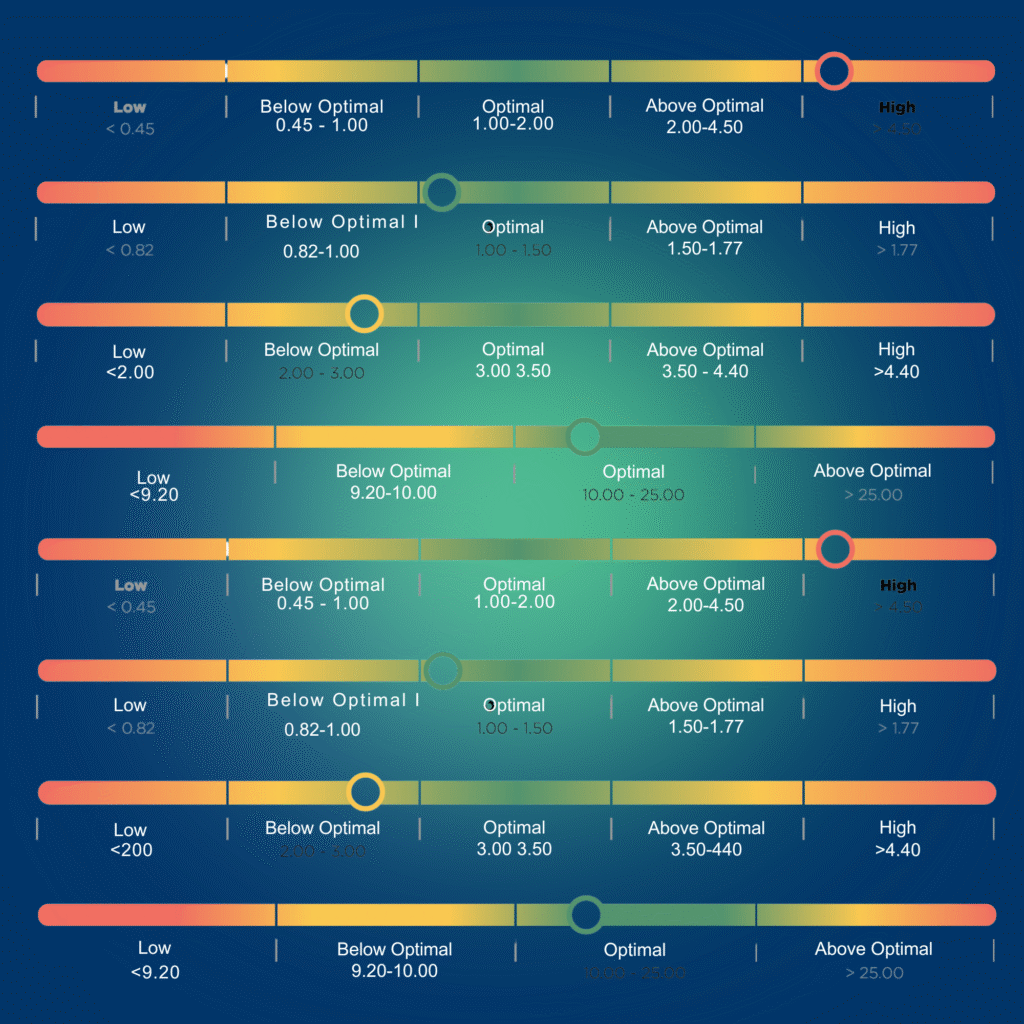
Functional Insights. Personalized Healing.
See the full picture of your health with advanced blood analysis that connects the dots conventional labs miss.
Clear, Personalized Insight
Get easy-to-read lab reports with color-coded visuals that show where you fall on the optimal health spectrum.
Identify Root Causes
Understand how your symptoms connect to deeper imbalances across key body systems.
Actionable Recommendations
Receive targeted nutrition, lifestyle, and supplement suggestions based on your unique patterns.
Progress Tracking Over Time
See your healing in action with visual trends that track changes from test to test.
Education & Empowerment
Learn what your results mean and how to take control of you health in your own life.
Tailored to Your Unique Biology
Your report is built around your personal data—no cookie-cutter protocols here.
Get answers and stop guessing
Get real answers from your lab work—and finally understand what your body needs to heal.
Food intolerance & biomarker evaluation
Actionable, at-home evaluation to asses your precise health status and track your progress throughout the program.
What is functional blood chemistry analysis?
Functional blood chemistry analysis is a holistic method of interpreting standard blood tests to uncover early signs of imbalance and dysfunction—before they become a diagnosable disease. Unlike conventional lab analysis that focuses on diagnosing illness, this approach uses optimal reference ranges (not just broad “normal” ranges) and looks at patterns across systems—like digestion, hormones, detoxification, inflammation, and blood sugar regulation. The goal is to identify how the body is functioning and where it’s struggling, so you can support healing and restore balance naturally.
How is this different from a standard blood test?
The blood tests themselves are often the same, but the interpretation is what sets functional analysis apart. Conventional lab reports look for markers that fall outside of a wide range used to detect disease. If your results fall within that range—even if you’re tired, inflamed, or struggling—you’ll likely be told everything is “normal.”
Functional analysis uses tighter, evidence-based optimal ranges that reflect what’s needed for true health, not just the absence of disease. It also groups biomarkers into body systems (e.g., liver function, adrenal health, blood sugar control) and identifies patterns that can explain chronic symptoms—often missed in conventional care.
What types of issues can this analysis help identify?
Functional blood chemistry can reveal underlying contributors to symptoms that conventional testing overlooks. These may include:
- Adrenal stress and fatigue
- Early-stage thyroid dysfunction (even if TSH is “normal”)
- Insulin resistance and blood sugar imbalances
- Inflammation and immune dysregulation
- Detoxification bottlenecks or liver overload
- Nutrient deficiencies (e.g., iron, B12, magnesium, zinc)
- Digestive stress or protein malabsorption
- Electrolyte imbalances and hydration issues These patterns provide insight into why you’re not feeling your best—and where to focus healing efforts.
Do I need to get new lab work done for this?
Not always. If you’ve had comprehensive blood work done recently (usually within the last 3–6 months), we can often use those results for your report. If your labs are outdated or missing key markers, we’ll recommend a specific panel and guide you through affordable lab options. Our goal is to minimize unnecessary testing while still getting the complete picture we need.
What will I receive after my analysis?
You’ll receive a detailed, color-coded report that explains your lab results in plain language. It includes:
- A visual summary of which areas of your health are in or out of optimal range
- Individual biomarker insights and how they relate to your symptoms
- Functional systems analysis (e.g., adrenal, thyroid, liver, gut, etc.)
- Personalized suggestions for diet, supplements, and lifestyle changes Many clients tell us this is the first time they’ve actually understood their lab results—and how to use them to take meaningful action.
How often should I retest?
Most people benefit from retesting every 3–6 months. This allows us to monitor how your biomarkers respond to lifestyle and nutritional changes, track improvements, and adjust your plan as needed. For some, once a year is enough for maintenance. But if you’re in the middle of a focused wellness protocol, more frequent tracking helps you stay on course and see measurable progress.
Our 4-month health consultation program includes Functional Blood Chemistry testing before and after.
How is Functional Blood Chemistry Different from the Food Intolerance Evaluation?
Functional blood chemistry analysis uses a standard blood draw to assess how your body systems—like hormones, digestion, detoxification, and nutrient levels—are functioning as a whole, identifying patterns of imbalance that may not show up on conventional labs. In contrast, the food intolerance evaluation identifies which specific foods your body cannot digest and assimilate, even if those reactions don’t show up as traditional allergies or sensitivities. While blood chemistry reveals how your body is functioning, the food intolerance evaluation helps pinpoint what may be triggering your symptoms through diet.
Stop guessing. Pick a time.
You tell us what's going on. We tell you what we think is being missed.
Book my free consult